
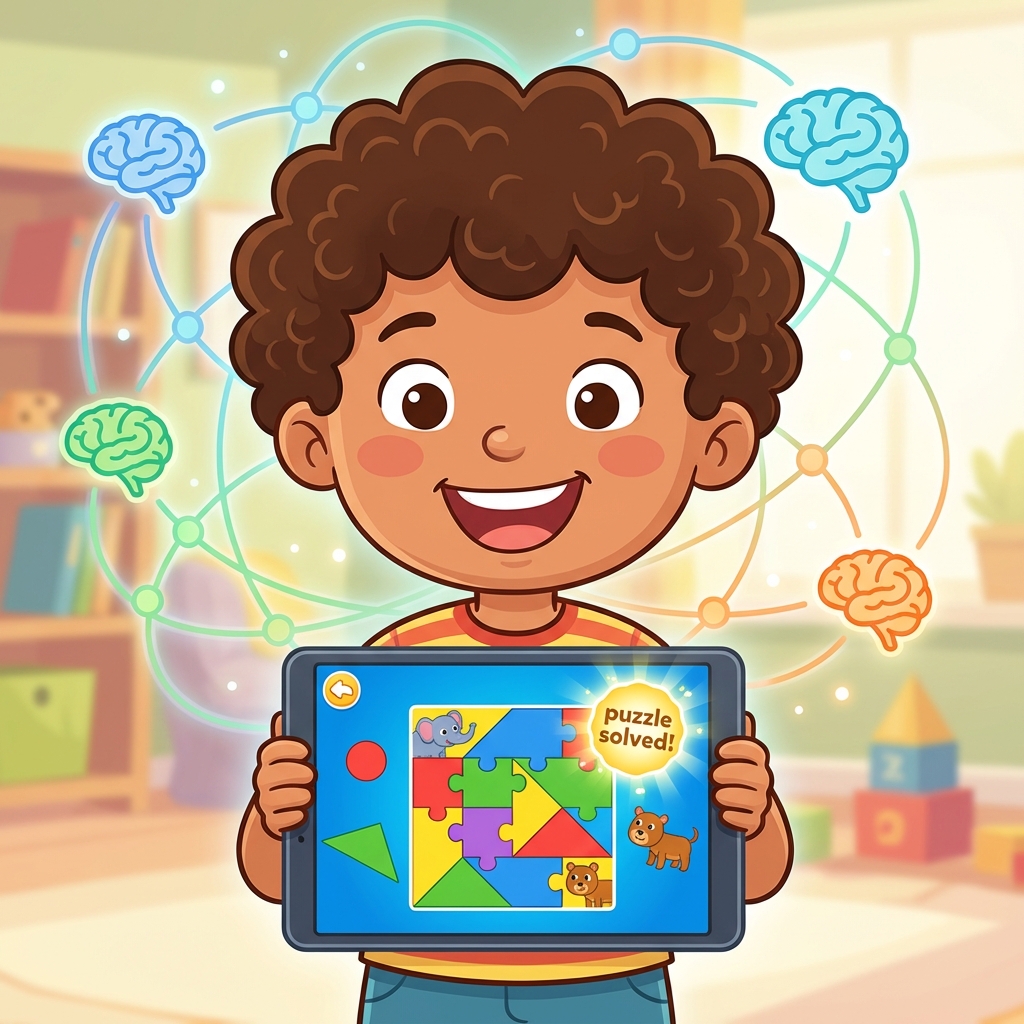
Power Up! How Gaming Boosts Your Child's Brain & Skills
Beyond Entertainment: The Learning Potential
For years, video games were often dismissed as mere distractions. However, recent neuroscience research tells a different story. When children engage with interactive games, they aren't just "zoning out"—their brains are lighting up with activity.
1. Neural Improvements
Interactive gaming requires constant decision-making, planning, and focus. This stimulates the prefrontal cortex, the area of the brain responsible for cognitive control.
- Problem Solving: Puzzle games limit resources or time, forcing the brain to find creative solutions under pressure.
- Memory: Keeping track of game objectives, locations, and patterns exercises both short-term and working memory.
- Attention: Fast-paced games train the brain to filter out distractions and focus on relevant stimuli, a skill that translates to classroom learning.
2. Motor Skills Mastery
The connection between what a child sees and what their hands do is critical for development. Gaming provides a fun, repetitive playground for refining these skills.
- Hand-Eye Coordination: Whether it's dragging pizza toppings or aiming a puzzle piece, the feedback loop between visual input and hand movement is strengthened.
- Fine Motor Precision: Precise mouse clicks or touch-screen taps help refine small muscle movements, which are essential for tasks like writing and drawing.
Finding the Balance
Of course, moderation is key. The best results come when screen time is balanced with physical play. But rest assured, that time spent solving puzzles on Sobele.me is helping your child's brain build the highways it needs for future success!